The Human Commodification Project
Or, womb envy for bastards.

I am feeling increasingly frustrated by the continued success of the AI industry to centre the conversation on super-intelligent runaway-improving computers that will actively try to kill us all. This is a ridiculous misdirection from real harms we can actually address right now, and it’s working.
Theory-free inference isn’t necessarily a bad thing, but there’s a slant to this business that is both absurd and deeply sinister. Tying back into something I’ve written about before, this self-crithype that AI is dangerous, not because it’s unpredictable software being given control over systems with real-world consequences, but because it is alive, is no less dangerous for being laughably dumb.
Making it harder to tease apart, is the fact that it is being driven by a confusing mix of earnest true believers and villainous philistines. This is a dynamic seen before in politics and religion, and it’s just as effective here.
Terrified Experts
Now, sometimes scientific advancement is uninuitive, like quantum physics.
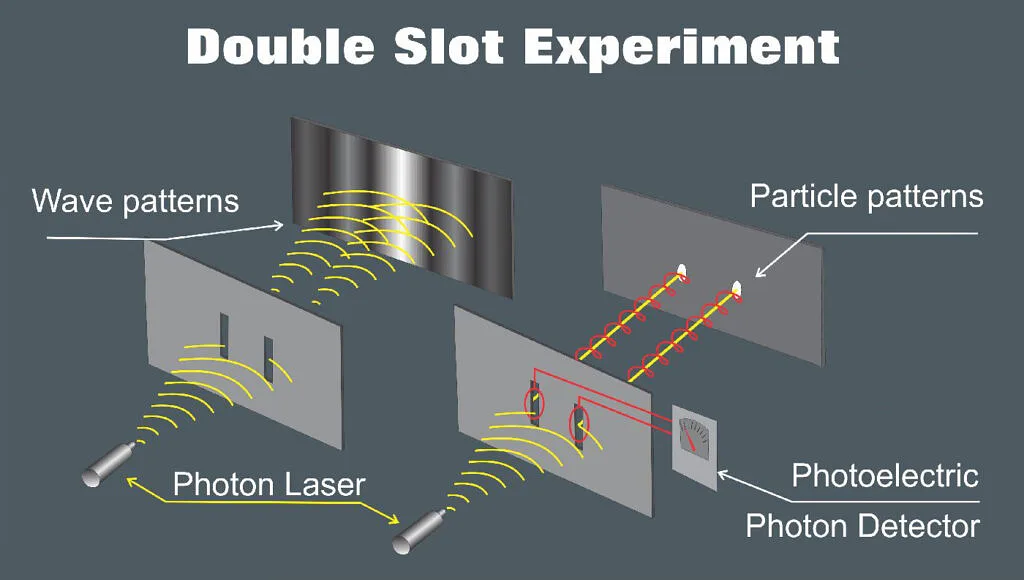 It actually makes less sense the more you think about it. Credit: Missing The Forest
And there are aspects of large language models that are genuinely interesting and require reframing how we think about not just computers but also the world. For example, if an LLM has no idea how the world works (and it doesn’t!) how is it able to perform any remotely useful work? As Cory Doctorow has written:
When I call an LLM a word-guessing program, that’s not a dismissal. It’s an acknowledgment of the degree to which the tactic of guessing words has exceeded all expectations in the production of sensible-seeming, conversational-seeming sentences and paragraphs. It’s all right to be surprised by how similar the output from a conscious being and a word-guessing program can be. It’s surprising!
But the craven or cracked leaders of the frontier AI companies have landed on this idea that AI is (or will very soon be) alive and you’re simply too naive to understand why that’s actually both inevitable and dangerous, and that they’re the only ones who can save us. I don’t think it’s an accident that this unprecedentedly broad, co-ordinated, engineered push of non-consensual adoption of AI-backed features on the entire tech-using population has not been accompanied by a commensurate effort to explain to all of these new unwilling users how the technology actually works.
Before I go any farther, I just have to run this, it’s obligitory:
 _Ted Chiang on Artificial Intelligence1
I don’t know if we’ll ever have true digital personhood – nobody does – but I buy Ted’s (and the Stochastic Parrots paper’s) position. I don’t think LLMs are it2.
I don’t want to get too distracted by the true believers pouring their hearts out on The Daily Show or to Ezra Klein. It’s worth focusing on the factions doing this with both eyes open.
Shut up, widgets
The “Smart Money” rushing into the least profitable industry in the history of the world isn’t excited at the prospect of digital god because they want to usher in a new form of life. They want to reduce those of us who make and do things for a living into interchangable peons. Until a couple of years ago, a knowledge-work job was one of the safer paths to a career of prosperity and dignity. This clearly pissed off people who would much prefer that you take what little they offer and be glad of it.
Commoditised labour already exists of course, just ask anybody in a temp agency or a call centre. That’s the vision - every programmer, graphic designer, copywrighter, middle manager, radiologist, scientist, etc, just an interchangable widget you can fire, pulled from a pool of functionally identical other widgets ready to beg to take its place for even less money.
I’ll point out here, that when given the opportunity to find uses for these tools, workers use them to increase the quality of their work, or find new ways to solve problems. I’ve seen this first hand, and read about the phenomenon in wider knowledge work. When organisations brute-force migration, it results in disastrous drops of quality which often requires hire-backs. The exception to that are the hyperscalers, which as monopolists, pay no price for their products getting worse.
Spicy Take time
Back to our hang-wringing acloytes doomed to usher in the future. None of the creeps openly calling for your widgetisation are capable of creating life. Sam Altman, Dario Amodei, Elon Musk, Satya Nadella, Sundar Pichai, Mark Zuckerberg. All dudes. Sure, I can’t give birth either, and it doesn’t really bother me, but then I am consumed by neither the insatiable lust of eternal greed, or a deep hatred of women. But it seems to bother these guys enough that they are going to (in their own estimation) risk the world the rest of us live in. It is imperitive, for each of them, that they are the first one to create a new form of life.
Some of the humanities-types out there might be sniffing a parallel here. Where has this theme popped up before?
 No, Elon Musk was the genocidal facist. You’re thinking of Elon Musk’s Monster
There’s even a literary term for it - womb envy! I think these guys want to be divine, to be responsible for creating a soul. They have shown us over and over again that they do not understand literature[5^]. I am pretty sure they think Victor Frankenstein was the good guy.
The rest of us know better, and understood what Mary Shelley was showing us - there’s nothing noble in this quest for power, nothing for the rest of us to gain.
Back to reality
Anyway - this is philosophical, since we are nowhere near true artificial life. We have criminally inefficient word guessing programs that have some surprising uses, and some maniacs at the top hoping to use them to steal everything they can from us. They sell us stories of an egalitarian future where everybody benefits from these tools, but these are tools we cannot make ourselves, only the largest coporations with access to capital for the human toil required can iterate on and build them. If we come to depend on them, and they own the frontier of capabilities, then we are absolutely powerless to determine our own destiny. Infantalised. They wring their hands about hypothetical harm in the future, while ignoring or even justifying the ecological, human, social harm they are doing to our world, our society and our information ecosystem.
Ben, what the fuck
OK! Grim! I know! But that’s just some perspective. Let’s bring it back to the apocalypse they are both claiming to create and want to save us from. It’s self-aggrandising nonsense, and more importantly, a distraction. When someone repeats a headline they saw about 10% chance that a rogue AI agent will kill us all in ten years, educate them. Remove the FUD3. This isn’t some alien superintelligence bent on our destruction, it’s cloud software with some novel uses, and after the bubble takes out the speculation fever throwing up datacentres across the world, and people move to more local models, this will become less odious.
One last lol
This went online while I was drafting this post. It’s about one particular American datacentre in Utah, but as a citizen living in the datacentre capital of the world, it hits.
-
As well as Ted’s amazing article I reference here, he has written a beautiful piece of philosophy dressed as fiction called The Lifecycle of Software Objects. A novella about how making genuinely “useful” artificial life would still require education and parenting, and that effort confers a kind dignity and essential personhood on an entity, which is in tension with the commodification of artificial intelligence. ↩︎
-
And if we found something else that was a viable medium for consciousness, we would owe our creation something more than writing code in enterprise B2B SaaS applications.4 ↩︎
-
Fear, Uncertainty, Doubt. Common tactics in misinformation efforts to derail authentic debate. Used for years by intelligence agencies, propagandists and lobbyists for Big Tobacco, Big Oil, Big Telecom and now Big Tech. ↩︎
-
The concept is also explored in Dennis E. Taylor’s excellent Bobiverse series of novels, where a human named Bob is digitised into a computer matrix. Characters debate the personhood of this new entity, and Bob regularly clones himself (via
cp -ressentially) into fresh matrices, and these new creations are no less a person for multiplying asexually. They’re good books! ↩︎