Barefoot Development
I'm coming around to a new way of doing things.
As I have mentioned before, I am starting to come around to some of the capabilities1 of AI.
A couple of months ago I read this post by Maggie Appleton, a staff research engineer at GitHub.
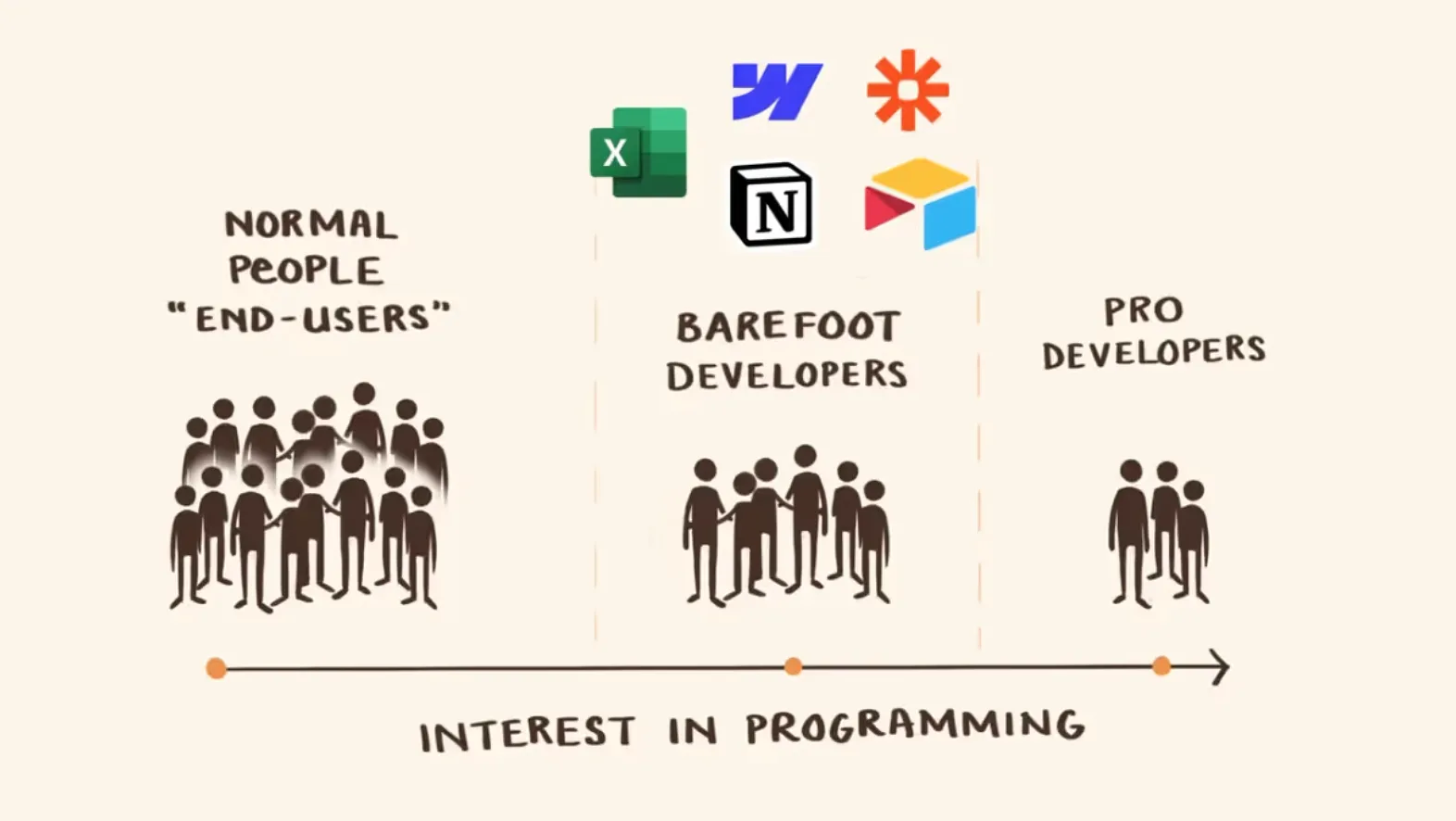
The big idea is that LLMs can lower the barrier of entry to unlocking the raw power of computers, by giving people who are curious, but not professional developers, the tools they need to automate, even to build, without learning how to code.
I know how to write code for games, mostly C# in Unity, but increasingly GDScript in Godot as well. I have been using agents to write game code, making the process repeatable. It won’t be deterministic, but it can be predictable, and importantly I am able to meaningfully review each line. My directions are very specific, like “extend the PlayerController to track collisions with SpeechTrigger via signals from footCollider”, and easy to verify. I think this will become pretty uncontroversial, this is not vibe-coding, it’s delegation. In particular, in professional settings, where getting changes into a project requires a lot of overhead in planning, ticket-creation and merge-/pull-request creation and review, using a context-rich agentic LLM to do some of that housekeeping makes a lot of sense.
However, as Maggie says in her talk, there’s something interesting also happening with vibe-coding. Now, I feel very strongly that there’s no place for vibe-coding in software that is created for general use. I don’t want to trust my data or infrastructure to someone else’s poorly-understood, likely poorly-designed, tech. If they don’t know how it works, how can they stand over it and take responsibility for it? However, for people to self-serve themselves functionality that is bespoke to them, there’s something powerful and new there.
The SaaSpocalypse is overblown, but not nothing. The monopoly on software held by the software industry still exists, but has softened at the edges. I don’t know any small business owners willing to bet their entire companies on a HR system or CRM that someone vibe-coded over a weekend, but I do think that simpler applications that people had paid for just to have them done, may be on the way out. For example, writing automation scripts for CICD and continuous deployment is painstaking work for small game studios, that should be much more painless now. Deterministic, reliable and boring (in the best way).
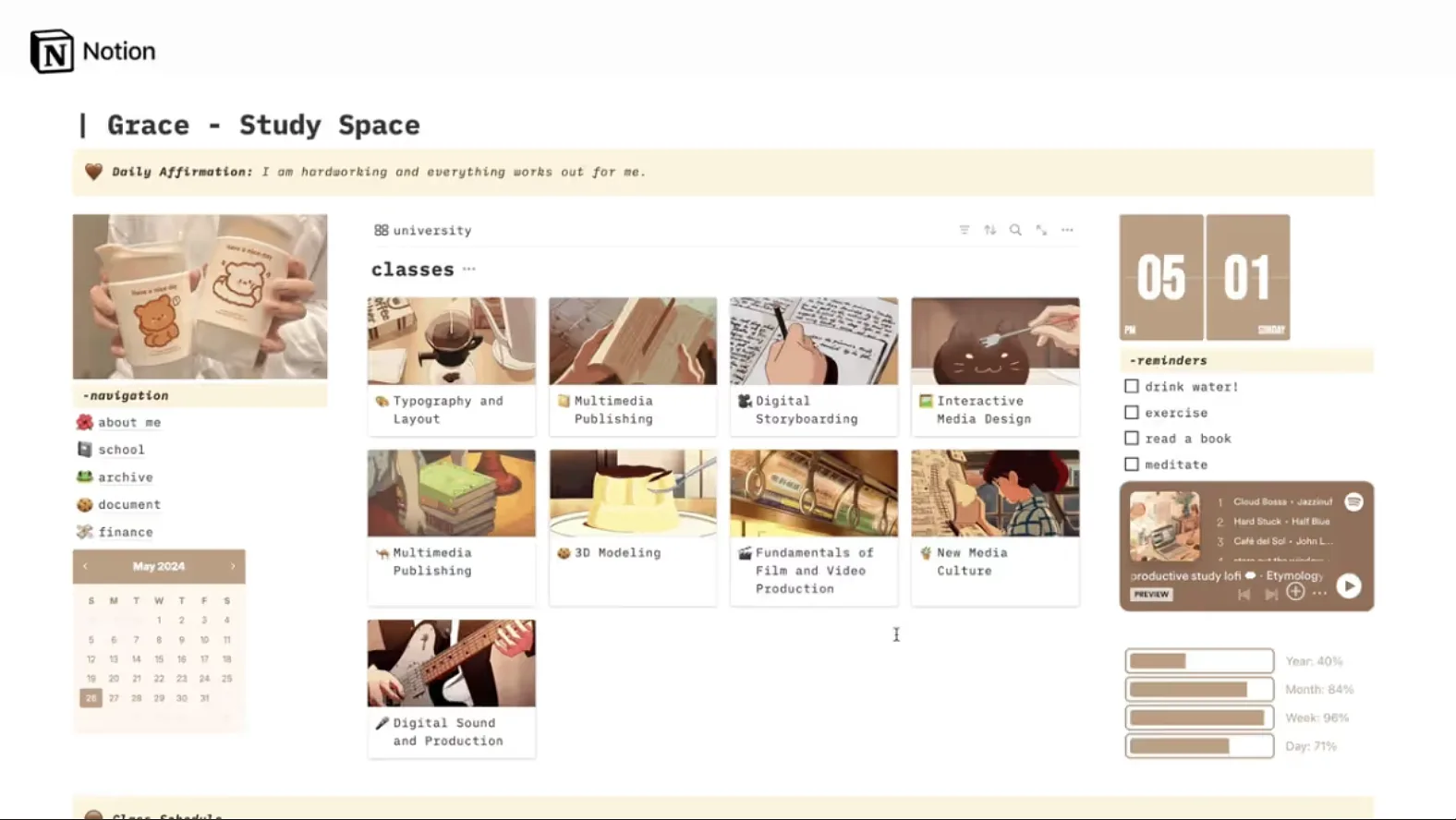
And for people not working in any kind of software, the sorts of people who are spreadsheet wizards and Notion-dashboard-maniacs2, they have a way to raise their game.
 I am still mad at the AI industry for not considering any guardrails or investing any energy in making adoption a smooth ride. They have disrupted without invitation or regard, but since we’re here now, I am coming around to self-serving little apps. I have even started working on my own word processor. I used it to write this post!
Novel. the app
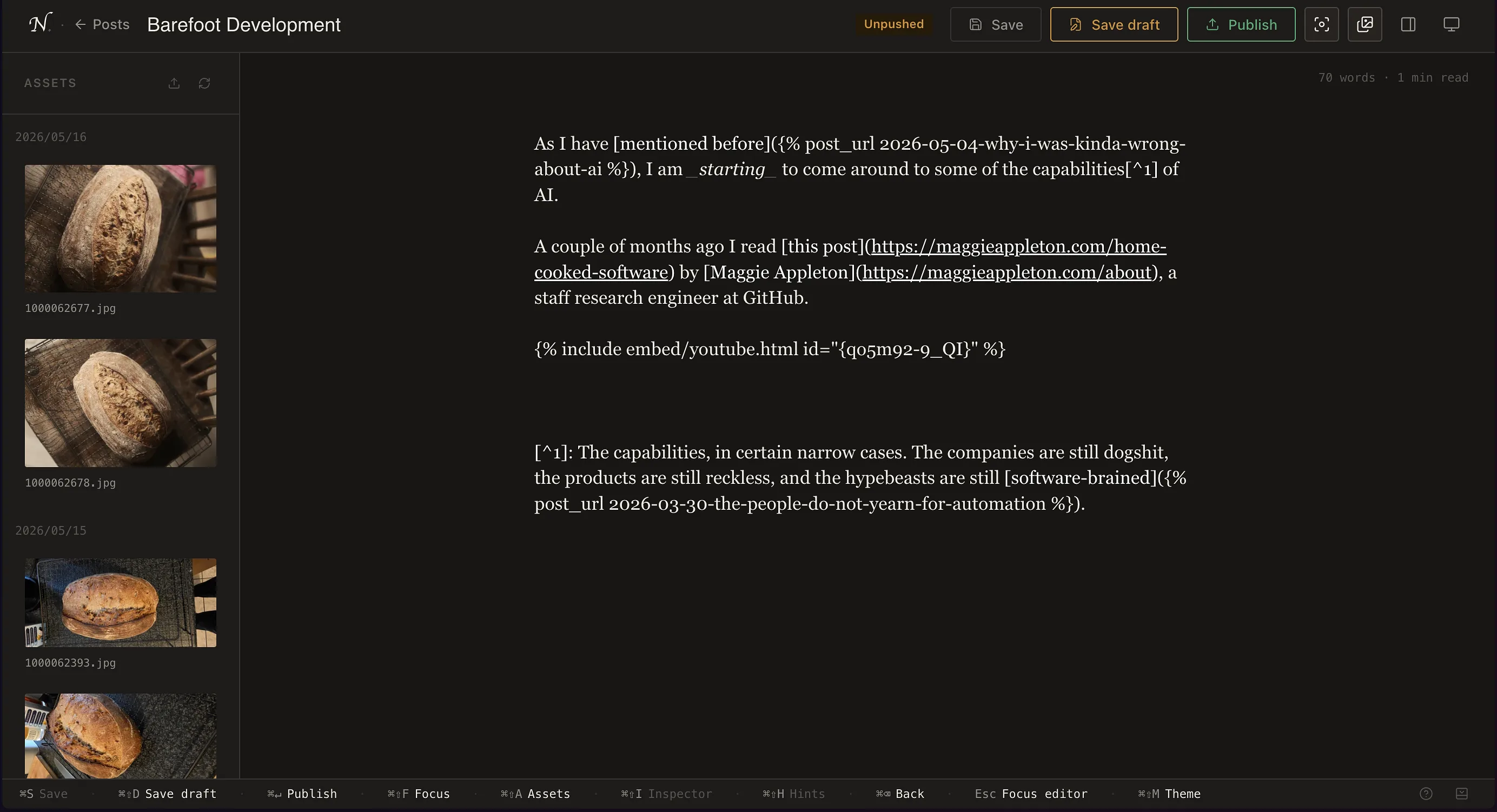
This is full of little quirks that are just for me. I’m not making product decisions for anybody else, and I’m not trying to make money out of it. I can’t read the code, so I don’t know how safe it is, though I have tried to stress-test it and have been very engaged in the functional design and architecture. If someone else wanted to deploy it for themselves, it would come with massive caveats, including “you may lose everything you ever wrote in it” and “an attacker may hijack this to steal or destroy everything else”.
The app itself doesn’t use any AI, and is cheap as chips to run; can easily run locally or on a Raspberry Pi. I’m not spending a fortune on AI tokens either, this is just eeked away at over the occasional evening, and I’ve been chipping away at it for months. I plan tasks, keep context windows small, and use Forgejo to plan milestones and issues, log bugs and plan features.
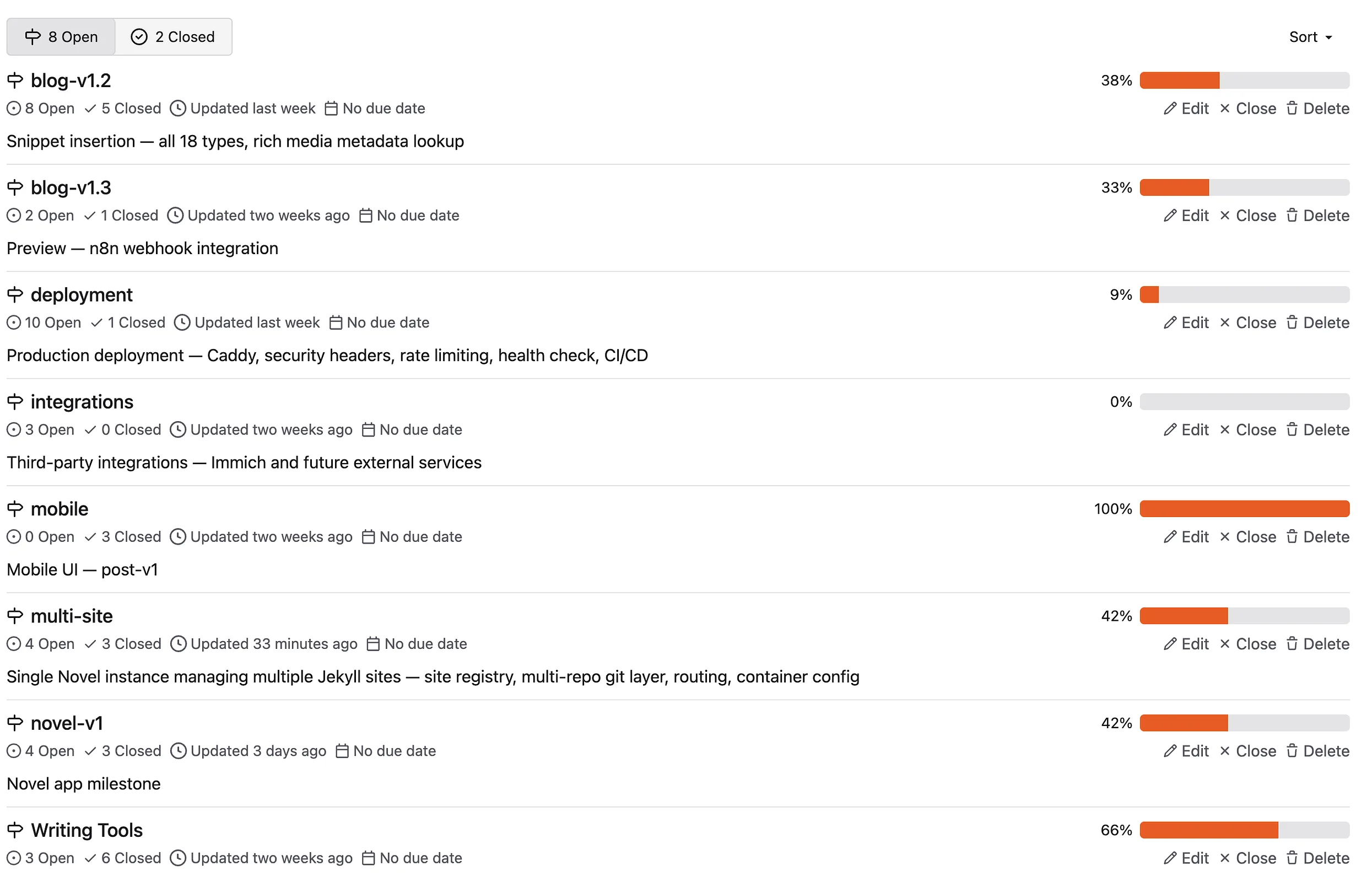 I can see this replacing Pages (which I don’t pay for, but is a moat for MacOS), Obsidian (which is free), and some of Google Docs (more on that later). It may also replace Scrivener, which I have paid for, and love, but it is also serving as a moat for MacOS, which I plan to leave soon.
Wrapup
I’m not fully comfortable with this evolution in myself. I know that tokens are going to explode in price soon, and that datacentres and the companies themselves are burning down the natural world and the world of work and creativity.
But as (problematic Epstein-adjacent oligarch) Bill Gates once said:
People tend to overestimate the short-term impact of new technologies, and underestimate the long-term impact.
I think that agentic development is here to stay. For better and worse.
P.S. Don’t run other people’s vibe-code. Seriously.
-
of agents at least, in certain narrow cases. The companies are still dogshit, the products are still reckless, and the hypebeasts are still software-brained. ↩︎
-
this was me tbf. ↩︎