Venturing Forth
Ugh, principles.

I grew up a Windows user, I was lucky enough to have a dad who was fascinated with technology and who handed that down to me, along with his pursuit of creativity through technology as tools, not medium. In those early years of my childhood, he used these tools for music, I used them for playing around, and eventually filmmaking.
My career in computing has taken me on lots of adventures, and possibly the biggest one since those first days of boot disks and editing AUTOEXEC.BAT, was my switch to Apple in 2010. I had ended up with an unlikely stint as a compositor, fixing, cheating and cleaning up images. It meant working with a beautiful Mac Pro, and I quickly fell in love. The fit and finish, the thoughtful touches and crucially the open standards all over the system. It just felt like the best of all worlds. Nicer to look at, nicer to use, simpler and yet more powerful. I spent one of my first invoices on a MacBook Pro. I was so excited I opened it on the LUAS back to work.
Over the years I became more of a power user, and MacOS is where I leaned how to be a developer and build games.
This has led me to a strange crossroads now, sixteen years later, in 2026. I hate Apple. With the benefit of hindsight and some education about how the world actually works, I can see that MacOS in 2010 was open, polished, powerful and considered because Apple was fighting for market share, hungry, and they wanted to woo me. Now that they rule so many aspects of our lives, they have switched to behaving like abusers who neglect, spy on and squeeze their customers. They are peak enshittifiers, and I’m done. Last year I went Android (a bucketful of other compromises, but I can write about that another time). The main reason I did that was to make my digital life portable - I don’t want any company to expect ownership over my business, I want to be moat-proof.
Switching from MacOS is tougher. I love Final Cut Pro, Scrivener, a bunch of other apps and things I probably don’t even realise I use and take for granted every day. Using open source software is a great alternative some of the time, and a compromised substitute most of the rest of the time, and in some cases, just not up to the task. My preference is of course to use and support open source tools that are part of the digital commons. But I also can’t deny that using agentic LLMs to write code offers a way to knock off the corners of the experience, as ethically icky as they are.
I’m writing this post in a CMS backend I’ve been slowly vibe-coding over months. I feel strange saying that since I came to programming relatively late in life (around when I turned 30) and I adored it.
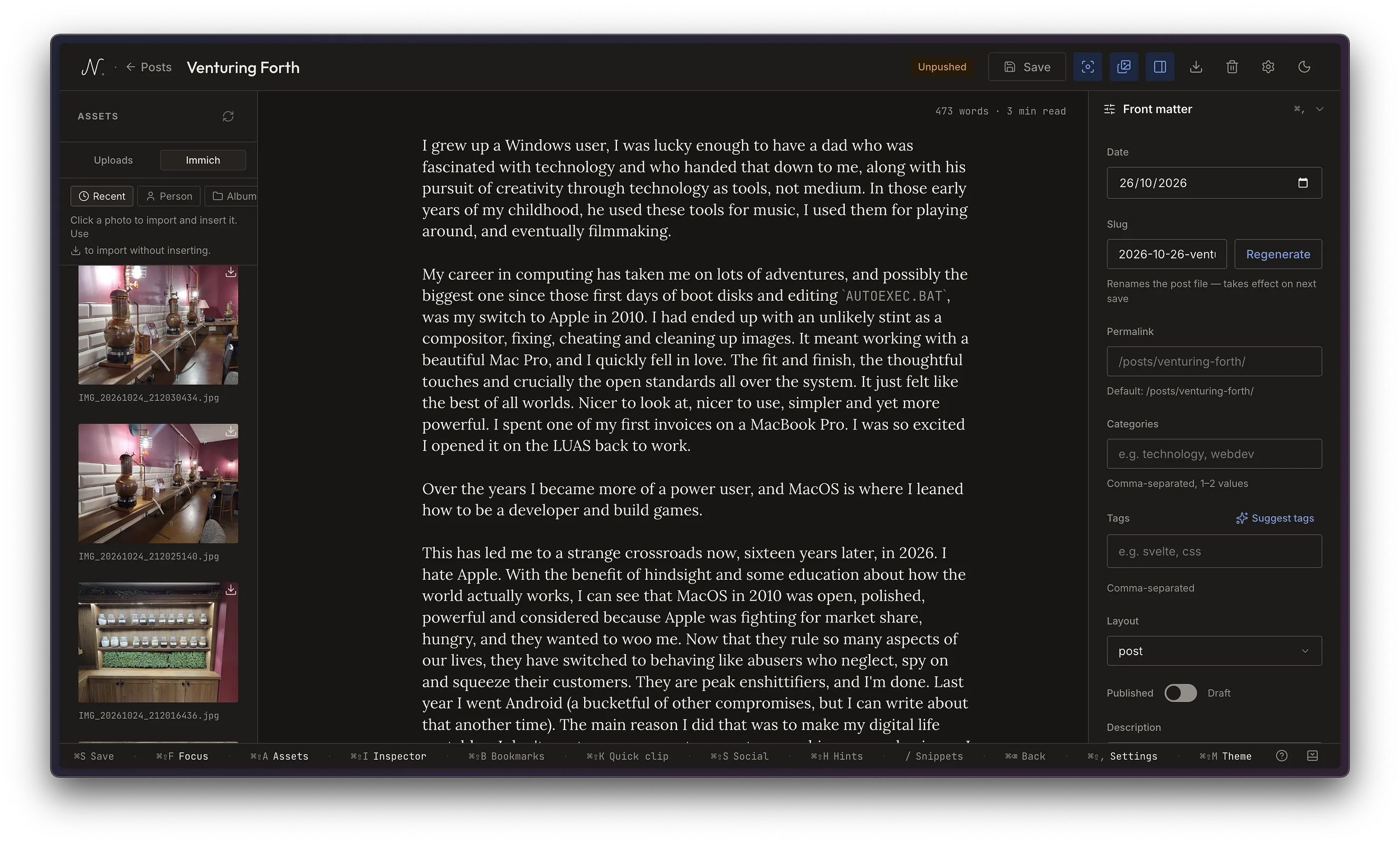 Nilay Patel of The Verge has said before that hearing about people’s vibe-coded apps is like hearing about their dreams. It’s hard to give a shit, which I get, so I’ll avoid talking specifics. I’ll just say that my CMS is a bespoke word processor just for me, doing things so specific that nobody would ever make it to answer a market need. It’s not Wordpress, but it’s a subset of features I want, without the ones I don’t. It’s not Scrivener, but it’s similar to some of my most-used features, with others omitted or hard-coded to behave a certain way.
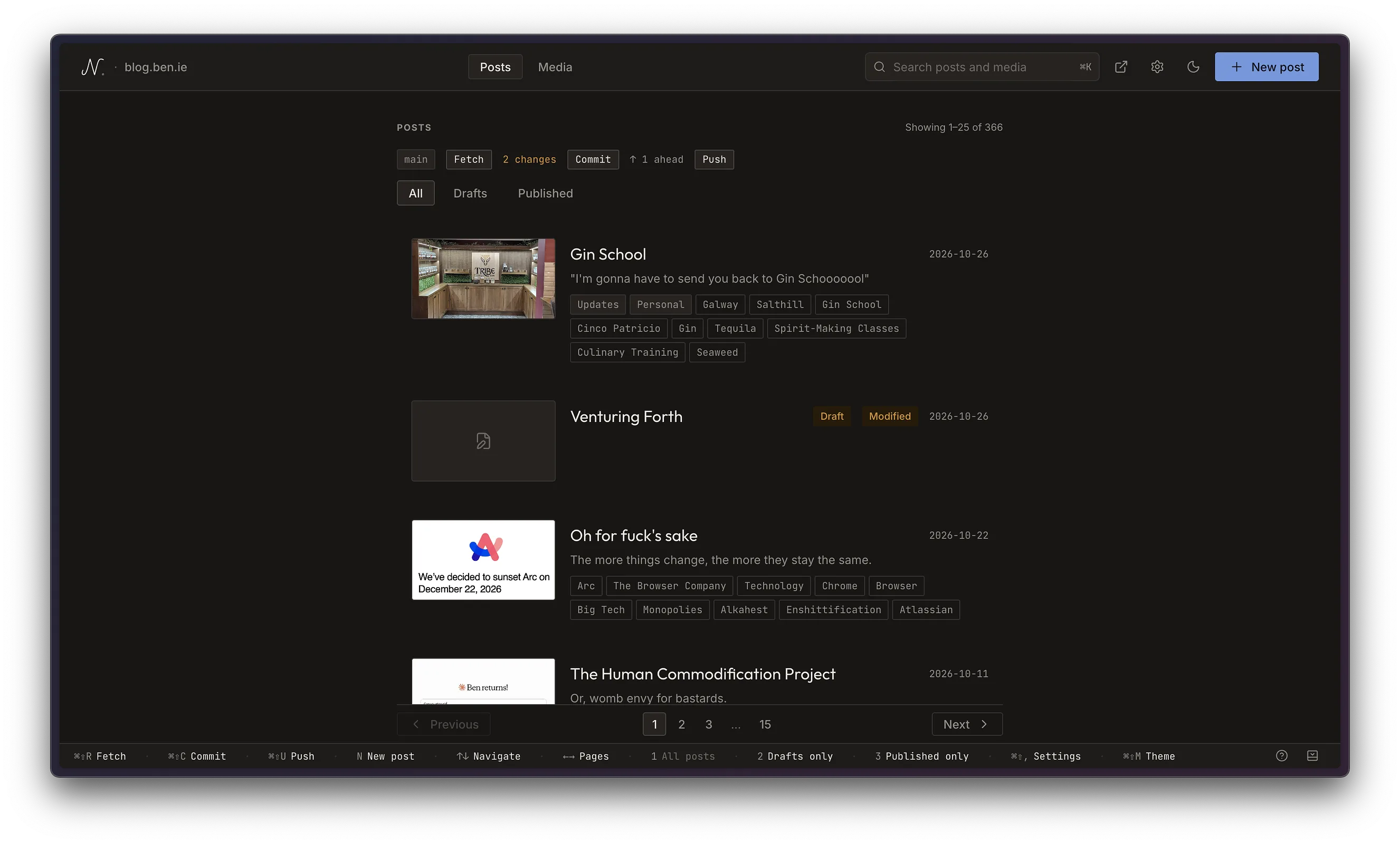 I have spent more time using it than shipping changes, and will stop every few weeks and do a cleanup pass, addressing some of the visual issues, identifying and fixing technical debt, making it run faster and smoother. All of this, but I can’t read or write the code it’s written in, which is a weird thing to get used to.
What makes me the most excited though is that this makes the prospect of me abandoning MacOS for Linux more of a possibility. Apple has, in their infinite wisdom and with their infinite resources, decided that my six year old laptop has reached end of life. Tim “Just tell your mum to buy an iPhone” Cook thought I should just throw my computer in the landfill and buy something newer. Instead, I’m going to flash this machine soon and install Linux and leave the upgrade cycle behind.